
Calcium

Serum (clotted blood) separated as soon as possible
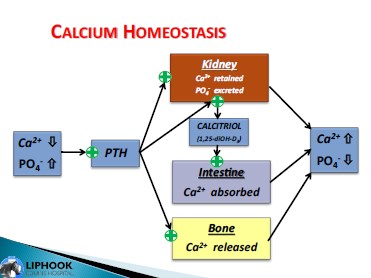
An electrolyte found mainly in extracellular fluid with extremely low intracellular concentrations. Approximately half of the circulating calcium is bound to albumin and is inactive. Only the free ionised fraction is physiologically active. Thus, it is generally preferable to measure ionised calcium as total calcium heavily depends on the albumin concentration.
Hypocalcaemia is rare but may be associated with sepsis and critical care cases. Alkalosis (e.g. from hypochloraemia due to gastric reflux or severe sweating) may also cause ionised hypocalcaemia. Occasionally also seen in lactating mares.
Hypercalcaemia usually results from chronic renal failure or as a consequence of products (e.g. PTHrp) of some malignant neoplasms, although rare cases of parathyroid adenoma may also cause this. Very rarely poisonous plants can cause hypercalcaemia via vitamin D-like substances.
See also:
- Weight loss