Skip to content

Lameness and Poor performance Investigations

Lameness and Poor performance Investigations

What is a Lameness Investigation?

Lameness is a common problem in both pleasure horses and competition horses, and usually occurs due to pain or physical restriction during movement. 

The severity of lameness varies, and in some horses lameness may be very subtle and difficult to appreciate and only manifest as a loss of performance or difficulty or resentment in performing some activities.

The team of surgeons at our hospital is very experienced in investigating lameness in the horse, as well as cases of poor performance and back problems. 

The hospital admits horses of all shapes and sizes, from miniature Shetland ponies to thoroughbred racehorses and top competition horses.

Facilities

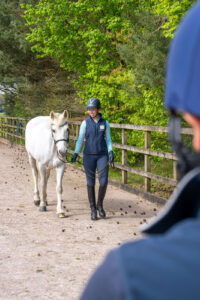
We have a dedicated assessment area at our hospital, where our vets can observe horses walking and trotting in hand and lunging, on both hard and soft surfaces.

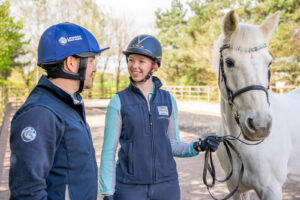
We also have a large ménage, where we can observe horses being ridden either by their usual riders or by our own experienced riders, and jumping, if necessary.

Clinical Examination

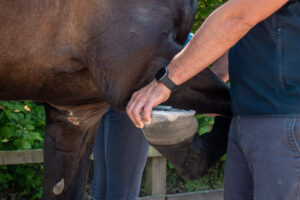
While in some horses, the causes of lameness may be easy to elicit by clinical examination and gait evaluation, in others more extensive and time consuming investigations may be required. This may include diagnostic analgesia (“nerve blocks”), in which local anaesthetic solution is injected around a nerve or directly into a joint or a synovial cavity, thereby temporarily desensitising a particular area of the limb. 

Following injection of local anaesthetic solution, the horse’s gait is reassessed to determine whether there has been improvement in lameness or performance. This enables the veterinary surgeon to determine which part of the limb is painful and contributing to lameness.

Diagnostic Imaging

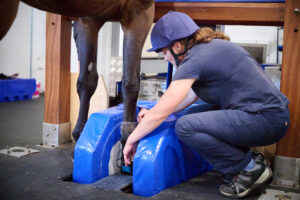
In most lameness investigations, diagnostic imaging is used to help determine the cause of lameness. The type of imaging used will depend on the nature of the lameness, but may include nuclear scintigraphy, radiography, magnetic resonance imaging and ultrasonography.

Once the cause of lameness has been established, our experienced veterinary surgeons will be able to advise you on appropriate treatment and management strategies, including medication, surgery, farriery and exercise programmes.

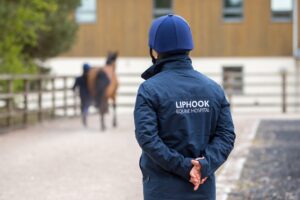
Poor performance investigations

Loss of performance in a competition horse can occur for many reasons. These may include:

Low grade lameness.
Back soreness or other musculoskeletal issues.
Medical problems (eg. anaemia, viral infection, post-viral syndrome, gastric ulceration or respiratory disease).
Gynaecological problems (particularly in mares).
Dental or biting issues .
Ill-fitting tack.
Rider or training issues.
A horse being asked to compete at a level out with its natural ability.

A combination of these issues often contributes to poor performance or a loss of performance. Investigation of poor performance can be challenging and may take several days. Our hospital team takes a multidisciplinary approach to the investigation of poor performance or loss of performance.

The specialist surgeons and medics have complementary areas of expertise and interests, and work together to ensure that every body system can be assessed. Furthermore, we have a number of experienced competition riders who can ride and assess the horse in our large menage. Specialist equipment including telemetric ECG and overland endoscopy, as well as our modern diagnostic imaging equipment is available at the hospital and often necessary for these investigations. 

Our onsite specialist equine laboratory means that instant analysis and same-day results are attainable for blood and other samples. Horses that are referred to the hospital for investigation of poor performance are usually required to stay in for several days. It is important that the horse’s normal tack is brought in and, where possible, that the horse’s usual rider is available at the time of initial consultation to ride the horse.