
Careers
We’re always open to hearing from qualified vets, nurses and support team professionals who are interested in joining our practice.

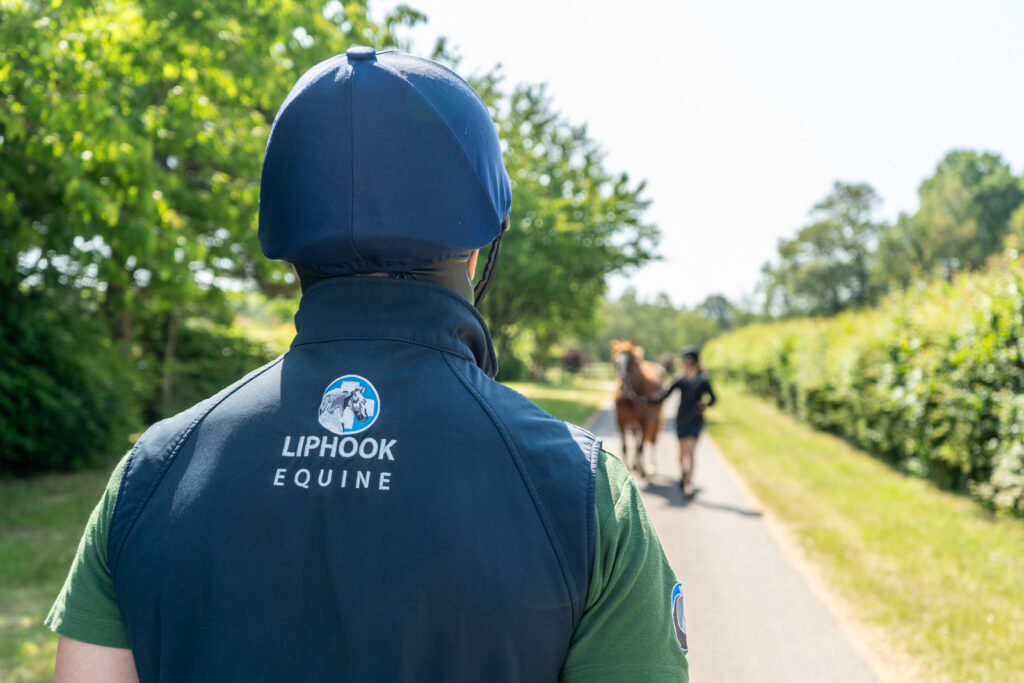
Join the Liphook Equine Hospital team
We’re always open to hearing from qualified vets, nurses and support team professionals who are interested in joining our practice.
We’re proud to provide a wide range of hospital, referral, ambulatory and laboratory services to patients and clients across our catchment area of Hampshire, West Sussex, Surrey and Berkshire, as well as equine veterinary practices across the UK.
Our fantastic team is made up of experienced, talented equine veterinary professionals, who are actively encouraged to pursue their clinical passions and areas of interest.
Being part of the VetPartners group of practices also means that we can offer generous CPD allowances and great training and development opportunities, as well as access to great perks such as the Health Shield cash plan scheme, our Equine Clinical Board and Clinical Interests Groups, a large central support team, personal development plans and much more.
For a confidential, informal chat about our availability, get in touch.
We are committed to providing a fair recruitment process with equality of opportunity for all, and our vacancies are open to those from all backgrounds.
Our Career options
Visiting vets and vet students
Hospital extern
We offer four-week hospital externships for final year veterinary students, university residents in training and recently qualified vets, which are aimed at those who wish to pursue a career in equine medicine or surgery.
The hospital extern lives and works in the hospital; onsite accommodation is provided.
You will work closely with our team of house vets and hospital clinicians (five European specialists in surgery and three European specialists in internal medicine).
Primary responsibilities include pre-operative preparation of patients and scrubbing into elective and emergency surgeries.
The hospital extern also helps in the admission of routine and emergency hospital cases and the monitoring and care of hospital in-patients.
Diagnostics extern
We offer two-week externships for visiting veterinary surgeons and veterinary students (in their last two years of clinical training), based in the diagnostics centre at the hospital.
Please note that accommodation is not provided.
The diagnostics extern will be expected to assist house vets and hospital clinicians in the evaluation of lameness cases and poor performance investigations and the work-up of medical cases.
You can expect to be involved in a wide range of diagnostic modalities used in a referral hospital setting, such as nerve blocks, video endoscopy, ultrasound, gamma scintigraphy, radiography, MRI and CT.
You will also have the opportunity to help with the monitoring and care of hospital in-patients, including those in the intensive care unit.
This externship gives students a breadth of experience in the diagnosis and treatment of horses in an exceptional referral hospital setting.
Ambulatory extra-mural studies (EMS) placements
We offer two-week EMS placements for veterinary students in their last two years of clinical training), or visiting veterinary surgeons based with our busy ambulatory team (road vets). Please note that accommodation is not provided.
Our road vet team works with a high regard for evidence-based medicine and the majority hold post-graduate qualifications.
They serve a varied population of clients and horses – from racehorses, high-level competition horses, and top-quality studs, to leisure horses and ponies.
This placement gives students the opportunity to experience all aspects of first opinion equine veterinary care and there may be chances to follow-up road vet cases when they are examined at the hospital or referred to hospital clinicians.
If you are interested in applying for an externship or ambulatory EMS placement, please email [email protected] for more information. Early application is advised due to high demand.
Work experience
We accept school pupils (aged 16 years or over) who are interested in a career in equine veterinary nursing or veterinary medicine on work experience placements.
This may be part of their formal school work experience, or arranged during school/college vacations.
Students will work alongside the veterinary nursing team on the yard at the hospital, and will get the opportunity to watch surgery from outside theatre and to observe the work of the vets within the hospital.
Placements are offered on an observational basis, and are available for one week.
As the number of students is limited to one at any one time and these placements are very popular, particularly during school holiday time, early application is recommended.
If you are interested in arranging a work placement, please click on the following link to fill in an application form below
Once you have completed the form please email it to our assistant yard manager at [email protected], or post to Assistant Yard Manager, Liphook Equine Hospital, Forest Mere, Liphook, Hampshire, GU30 7JG.
Hospital tours
We are happy to arrange hospital tours for local riding groups, pony clubs or other groups in the evening, during the week.
To organise a tour, please contact Beth Richards via email at [email protected], or by telephone on 01428 723594.
Work experience questionaire
Work experience Questionnaire
Applying for a house vet position
Liphook Equine Hospital offers 18-month positions for recently qualified veterinary graduates (who we call “house vets”’.
The housevet programme stands out as an exceptional experience compared with many internship programmes, as it offers:
The comprehensive and practical experience obtained during the house vet programme prepares young vets for a future career in any field of equine veterinary work.
The Giles Summerhays bursary
Giles Summerhays was a partner and surgeon at Liphook Equine Hospital, retiring from the practice in 2014.
He has always appreciated the support from the house vets who looked after his cases while he was a surgeon, and wanted to reward present and future house vets for their invaluable, hard work and enthusiasm.
He came up with the idea of funding a travel bursary for the house vets, which would go towards a visit abroad to an equine hospital or institution for a month at the end of their tenure.
This would help to expand their horizons and future career, and also help LEH to foster good relations with other practices around the world.
The bursary is worth £2,000/year and could be taken by one person, or if more than one wanted to take it, could be divided.
Ultrasonography is a valuable and widely used diagnostic tool in horses. Our equine hospital has several different digital ultrasound machines that can be used for ultrasound scanning of different parts of the body.
It is commonly used for diagnosing and evaluating musculoskeletal conditions, including joint, tendon, muscle and ligament injuries, and can be useful for monitoring the healing of these injuries.
It is also widely used for assessing the abdomen, chest and heart in horses with colic, respiratory or cardiac disease, and monitoring broodmare reproductive cycles and detecting pregnancy.
We have a range of portable ultrasound machines, as well as diagnostic centre-based machines, the latter being excellent for scanning the more difficult areas such as the chest and abdomen of the horse for the evaluation of heart or lung problems, or as part of examination in colic cases.
Musculoskeletal system
Ultrasonography is used extensively in lameness investigations for the scanning of tendon and ligament injuries, as well as assessing wounds, joint surfaces, fractures and soft tissue swellings.
Ultrasonography may also be useful for the detection of back and pelvic injuries.
Heart and vascular system
Echocardiogram of the heart is important to assess the chambers and valves of the heart and is invaluable in the assessment of the significance of many types of heart murmur.
Colour flow Doppler is used to assess dynamic blood flow through different parts of the heart.
Ultrasonography is also useful for assessing thrombi and peripheral blood vessels.
Abdomen
Ultrasonographic examination of the intestines and other abdominal structures (eg. liver, kidney and spleen) is an important diagnostic tool in the investigation of horses with colic, weight loss or diarrhoea.
Ultrasound guidance is frequently used to allow safe and precise biopsy of internal structures such as the liver, lungs and kidneys.
Reproductive tract
Ultrasonographic assessment of the ovaries and uterus is important in the management of broodmares to assess the reproductive tract, stage of oestrous cycle and pregnancy diagnosis.
Regular ultrasound scans of the ovaries are performed (every few hours) of mares undergoing artificial insemination (AI), to ensure that insemination is performed at the optimal time.
Early pregnancy diagnosis is important to ensure that a mare is not carrying twins.
Thorax
Ultrasonographic assessment of the thoracic cavity, including the lungs, is important in the assessment of horses with pneumonia, lung masses or pleurisy.
Our veterinary surgeons have access to high quality, mobile digital ultrasonography equipment, meaning that some scans can be done at the horse’s own premises.